
DAMIANA on Trans Joy, Leaving Berlin, and Her New Name | HINTERHAUS
May 7, 2026
By Alexander Cheves
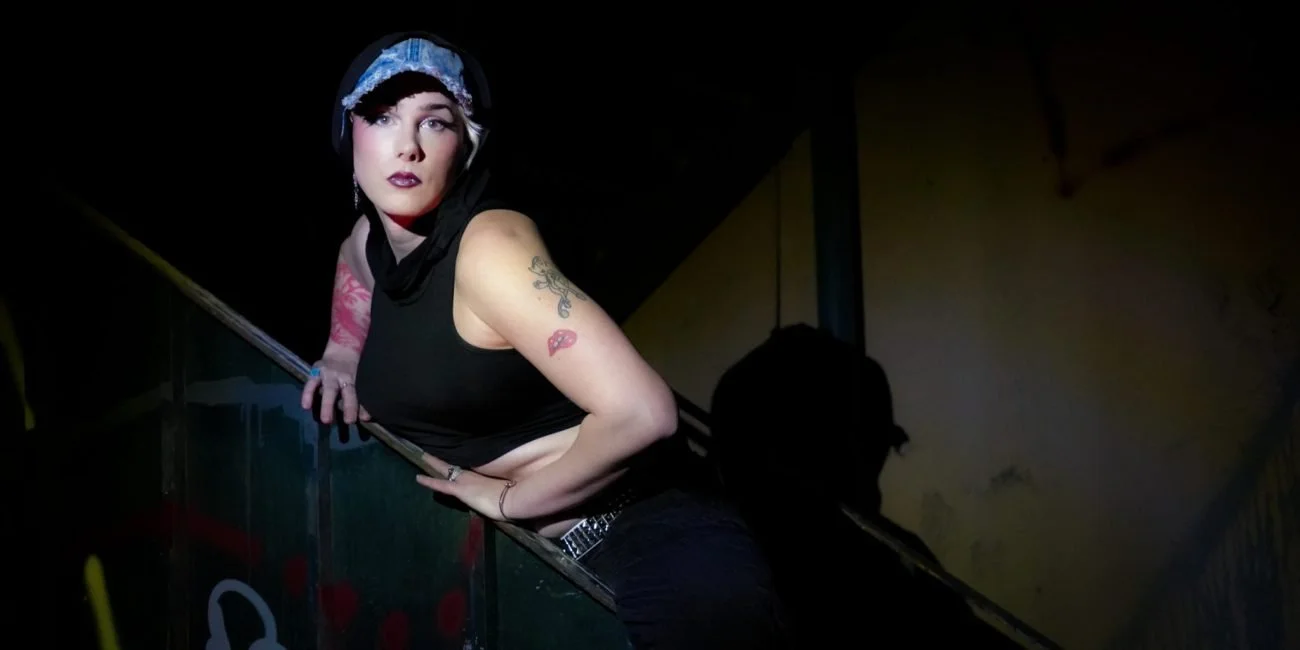
I speak with DAMIANA the same day she announces her new artist name. Over the previous weekend, she says, she posted some teasers of the change to Instagram.
Before our chat, DAMIANA—a queer and trans DJ, producer, and party organiser formerly based in Berlin, now Lisbon—was known as mx.pinky. She founded exude records, one of the only music labels in the world created by and for transgender electronic music artists.
DAMIANA has put in the time: over ten years behind the decks with sets at venues like OHM Berlin, Razzmatazz in Barcelona, Outra Cena Lisbon, and Rinse in France. And exude records has raised over fifteen thousand euros in mutual aid for trans people in need.
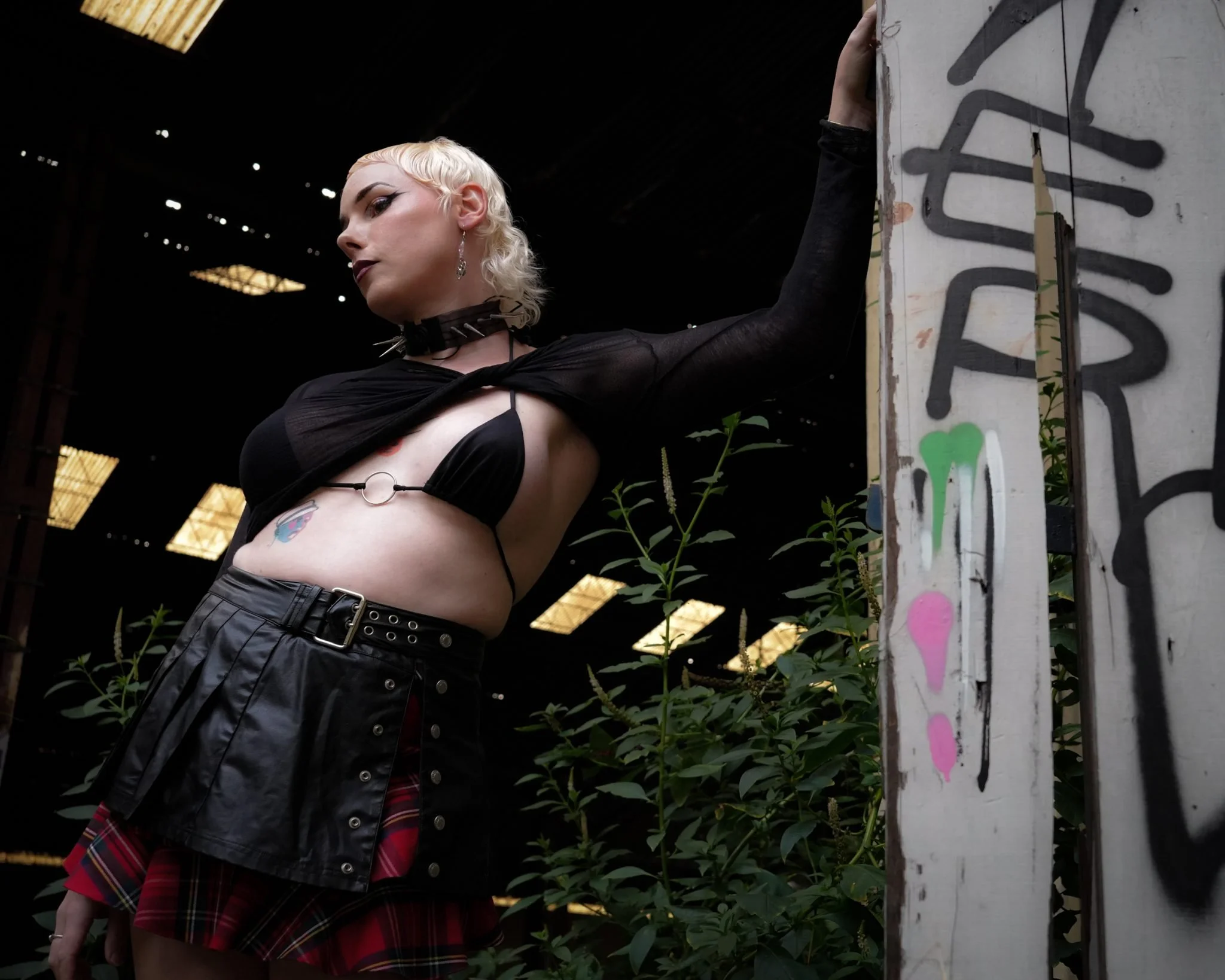
Why was it time for the name mx.pinky to retire?
She chose her former name in late 2021, at the start of her transition. “Pinky” was a school nickname from when she was a young teenager, something she wanted to reclaim. “The name that brought me into a sphere where I became who I am now.”
Years later, something shifted. Her DJing had developed a style that felt clear and articulate. And 2026 is the year of the fire horse, according to the Chinese Zodiac. To her, that meant it was time for a change.
“I’m a Sagittarius, so I started a new cycle this year. It felt like there was something turning in me that asked: Am I really still mx.pinky now?”
A name always carries a persona and a sound, she says. This one no longer fit.
Why the name “DAMIANA”?
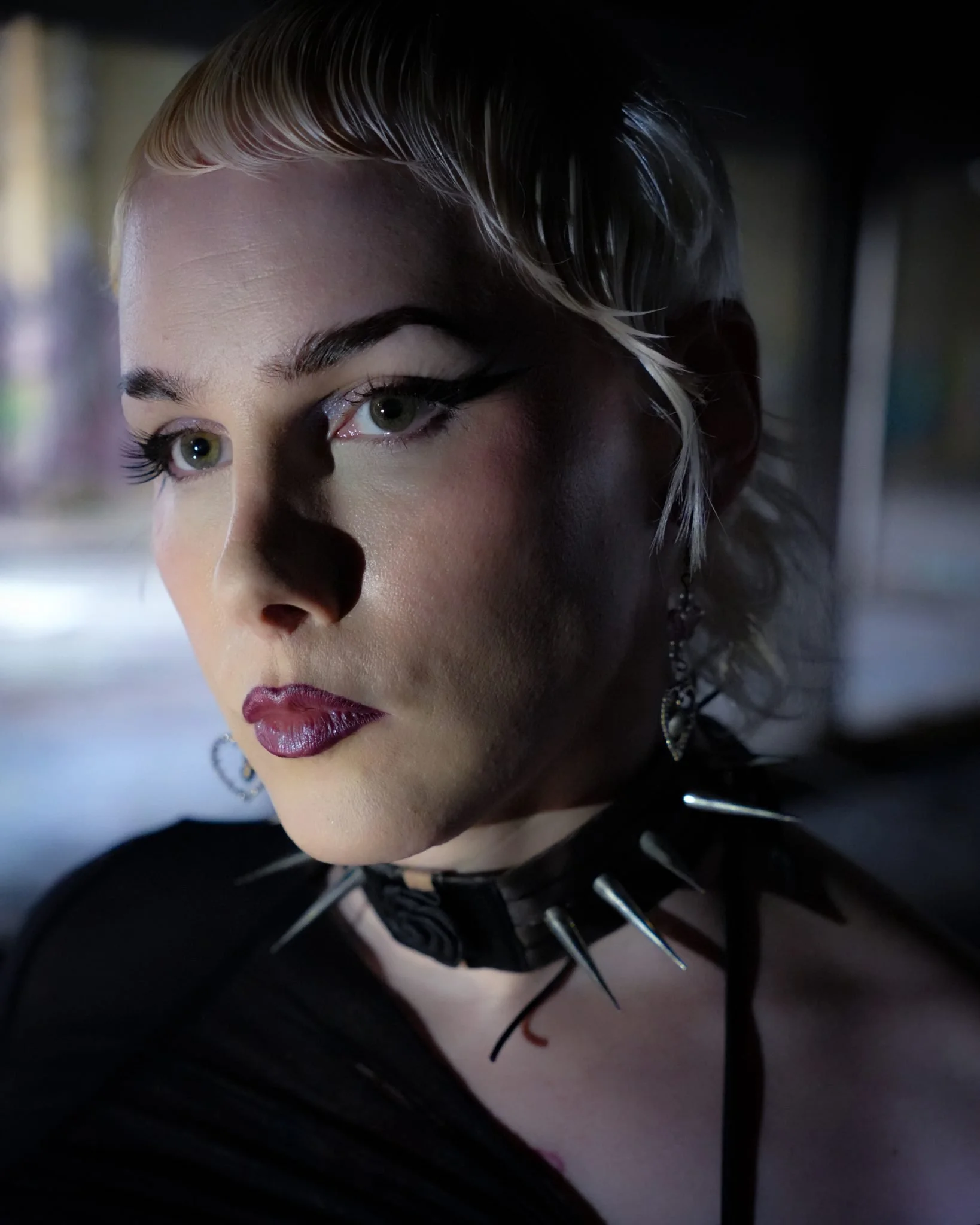
One day, she and her partner were researching herbs and stumbled across Turnera diffusa, known as damiana, a shrub native to southern Texas in the United States, Mexico, Central America, South America, and the Caribbean.
It’s a small, woody shrub that produces small, aromatic flowers. It’s traditionally used in Mexican liqueurs and is valued in herbal teas and smoking blends for its calming and mild psychoactive effects.
“When I read about the herb ‘damiana’, it fit my sound. It’s a psychoactive herb, a sensual herb. It’s an aphrodisiac. That feels right. I want to make listeners feel sensual, intimate, and safe with me.”
Has your sound changed with the name?
mx.pinky sonically was “all over the place”, she tells me, but in a good way. It ran the gamut from techno to drum and bass to R&B. She loved—and still loves—”unpredictable combinations”.
“Sometimes I lose people, which is okay. But I want to be a little more cohesive now. mx.pinky was my rebellious phase. I want to take listeners by the hand now.”
Her sound is now more considered. She uses the term “grown up” but clarifies: she’s still playful, still surprising. “Before, I would have pushed you into whatever felt cool for me. I’m gentler now.”
The state she wants to create now is “trippy, rolling, hypnotic, a little slower”. She wants people to feel “loose” on the dance floor.
“I come from dance floors. I started DJing because I was 24-7 in clubs and wanted to create this feeling in others where I’d lose myself and be gone for thirty minutes without speaking. Still dancing, but in a leaving-the-body kind of way, looking from outside into myself.”
Creating this, she says, does not require a specific genre. “It can happen with all kinds of music, but house music in particular is so elevating. But the goal is always hypnotic.”
Where did you grow up?
DAMIANA is from a village near Tegernsee, Bavaria. She describes it as “rural and Catholic with lots of farming.” At that time, nightlife existed only as something on television.
When she was “fourteen or fifteen”, she saw videos of the Love Parade in Berlin, live-streamed on VIVA Plus, an old German music television channel that later merged into Comedy Central. She says it “looked like another planet”.
She studied in Rosenheim, south of Munich, but even as she explored nightlife there, she felt increasingly called to Berlin.
“Munich had rave culture, but it was not like Berlin. There was always this calling. I knew I would go.”
At 21, she was able to follow that calling and move to Berlin. She tells me she knew deep down that she needed to leave her hometown, and she quickly saw that Berlin was everything Tegernsee was not.
“Berlin was sexual freedom, gender freedom, and clubbing for 48 hours. When you come here for the first time, you love it or hate it. You’re either hungry or you leave after a year because you think: ‘this is going to kill me’.”
She was hungry, but she says she learned from queer friends where to draw boundaries, how to prioritise rest, and manage the city’s hedonism.
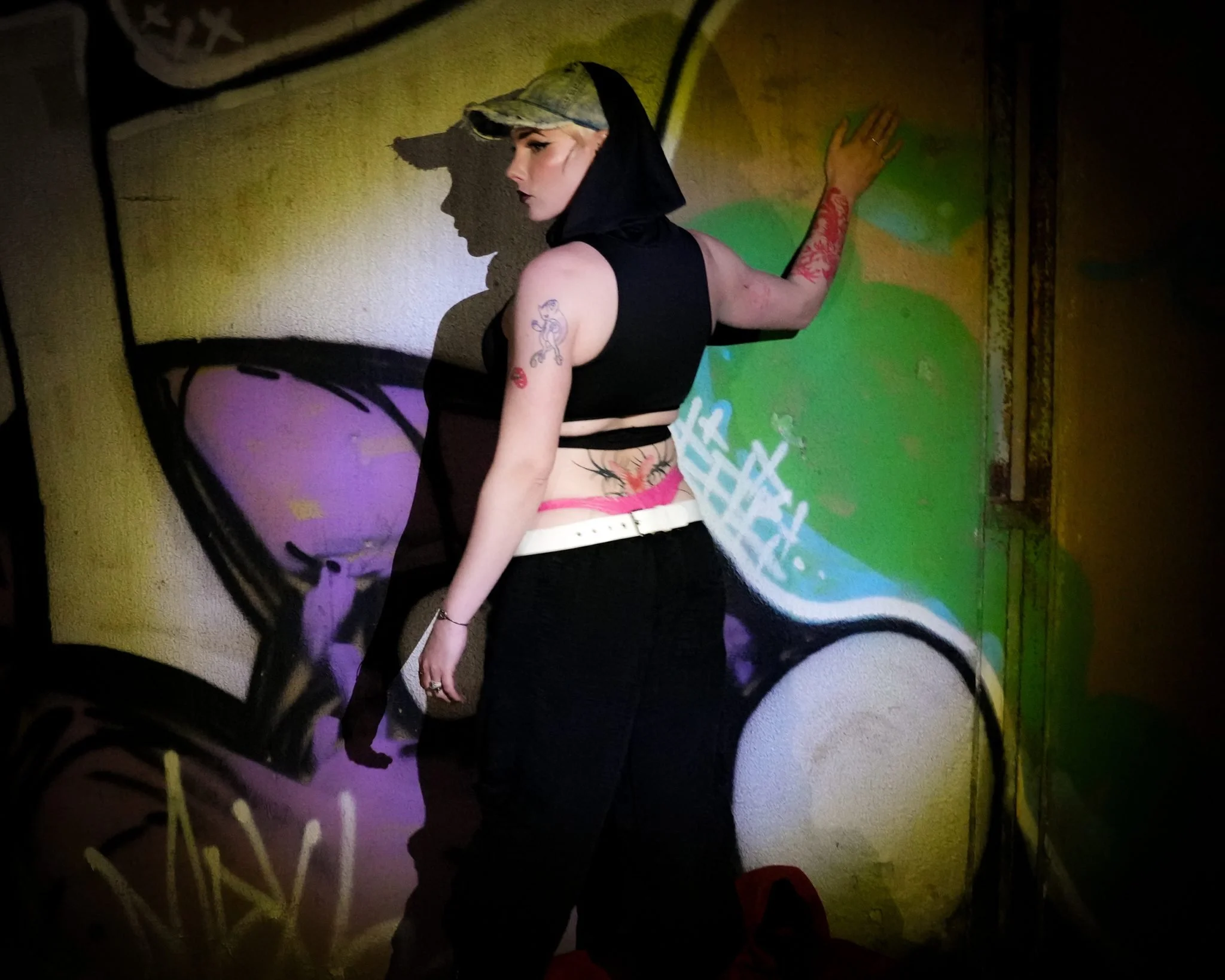
How did you start DJing?
She was already a musician: she played in metal bands and school bands as a teenager. DJing started via a friend at work at the tech startup job. They were a DJ of ten or fifteen years who, one evening, sat down with her and showed her how to handle vinyl.
Her first proper club set happened at Bertrams on Paulinke Ufer, a small space where, she says, she had her own party, and where, incidentally, the queer party Herrensauna eventually started. From there, she played larger venues, like Arena and Humboldthain.
She still plays vinyl when she can. “Vinyl is such a different energy that I can’t translate on digital.”
She tells me the physical rhythm affects her timing and track selection in a way she can’t recreate on a screen.
How do you know when you have the crowd?
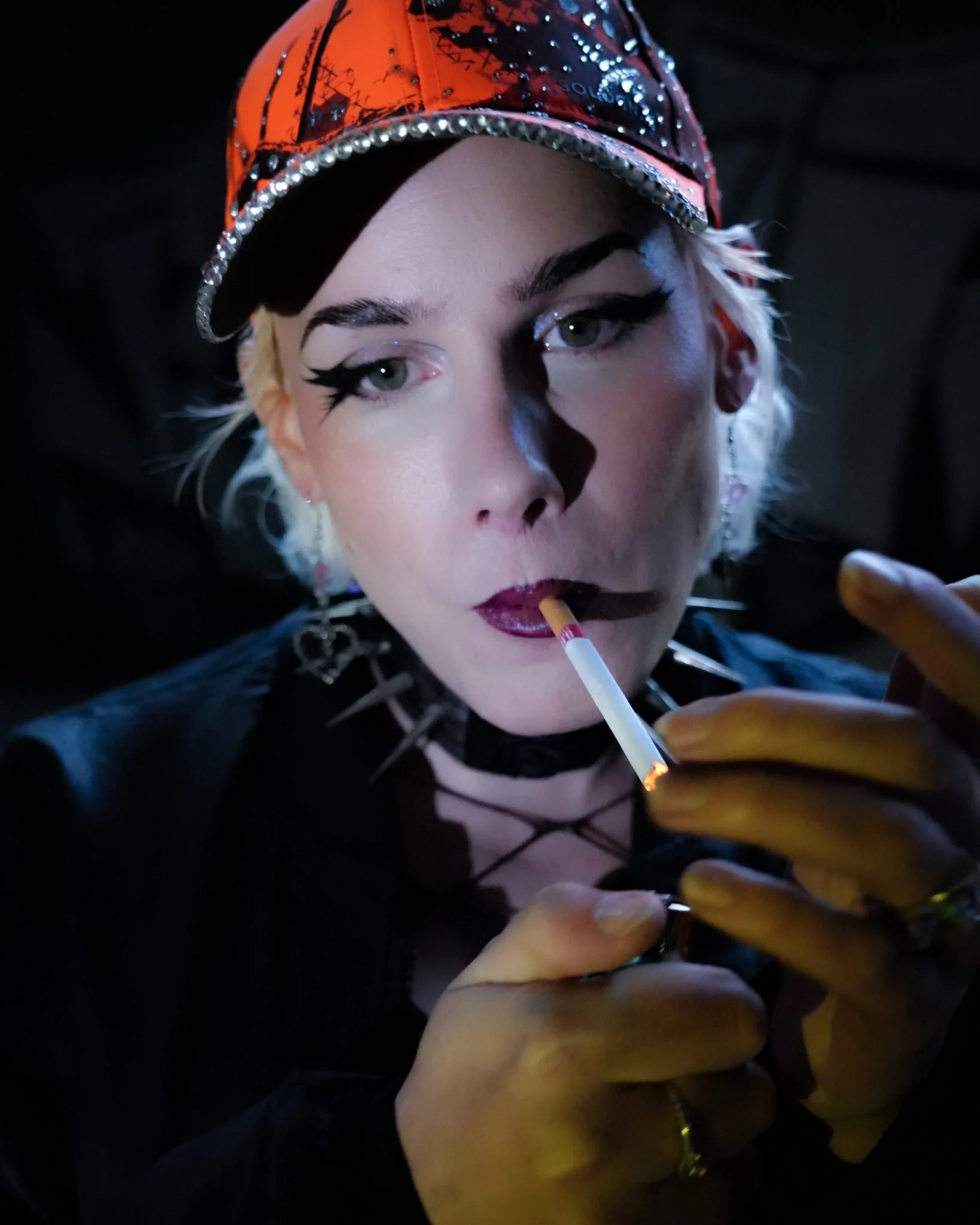
In the booth, she doesn’t make eye contact. In fact, she usually wears a cap and keeps her head down. She’s autistic, she says, so making eye contact with people dancing near the booth can be jarring. She prefers to read the room with the temperature.
“When I notice a temperature shift, it’s a good sign that I have the crowd. It means people are dancing, warming up, and are with me. We are in the soup.”
Tell me about exude records.
In 2022, she was recovering from facial feminisation surgery at home with her partner, Mel, who is also trans. They were talking about their frustrations with nightlife and brainstorming ways to address failures in the scene.
“We wanted to make a T4T space, something organised, produced, and led by and for trans people. That was the space we were looking for and felt we needed more of in Berlin.”
Berlin is widely seen as one of the most queer-friendly cities in Europe. That reputation, DAMIANA says, does not extend to trans people in the same way.
“At many events, trans people still wonder: Will the door staff be cool? Will the bar staff be cool? Will guests be cool? Can I go and dance without having my guard up?”
“Trans people are part of many queer parties in Berlin,” she says. “But rarely centred in them.”
How did exude records happen?
These discussions with her partner led to the creation of exude records (the name is always stylised lowercase, she tells me), a music label exclusively for trans artists. The first exude records party was held on December 2023 at Studio DB in Berlin Wedding. Then it moved to ACUD CLUB in Berlin-Mitte.
The idea of using the party to fund mutual aid efforts was built into exude records from the start. They had “fundraisers at the door to support community members trying to pay for surgery or living expenses,” she says.
Two years ago, they did an event to support families in Gaza. Across all events, over fifteen thousand euros have been raised. More recently, they did events fundraising for Casa T Lisboa, a non-profit-organisation that runs a refuge and support space for Black and trans migrants in Lisbon, and Trans*sexworks Berlin, a German non-profit non-profit-organisation and community made of up trans sex workers that offers counselling and support services.
“In time, our trans community started reaching out and telling us about people in need: ‘Hey, here’s someone who needs top surgery.’ Or: ‘Hey, someone can’t pay rent.’ exude became a platform to help them.”
DAMIANA had run mutual aid efforts on a larger scale before. During the pandemic, she co-founded Berlin Collective Action, a community organisation that raised two hundred and fifty thousand euros for nightlife workers who had fallen through the gaps in government support.
“From that, I realised how important it is to redistribute money. Some people just don’t have it. They don’t have the platform, Instagram followers, or network.”
As for T4T labels in Europe, “There might be none besides us,” she says. T4T LUV NRG is in the US, founded by Eris Drew and Octo Octa. “Their work is so cool, but sadly I’ve not met them yet,” DAMIANA says.
In Europe, some labels are led by trans people but release work by everyone, but “We wanted to keep the trans focus,” she says.
“At risk of being exclusionary, it’s so important for exude records to stay T4T. So many artists had their debut release with us. And the music is sick. It’s wild that they had not released anywhere else.”
Has Berlin nightlife gotten any better?
“When it comes to ‘safer spaces,’ the term has changed over the years. At some point, we acknowledged it’s more about awareness than creating a perfect space. But for trans people, it’s a lack of accountability, and accountability when things go wrong.”
She admits that club staff deal with a lot: overdoses, violence, people in crisis, and long shifts. Even public policies make it into nightlife, weaponising toilet rules and other harmful narratives are threatening the safety of trans people.
With exude’s parties, DAMIANA wanted “total control of the door, the bar staff briefed at the start of every night, and an awareness team brought in by us.” In Berlin, the events reached two or three hundred people at most, but the costs were enormous.

“To throw an event at our standards, it’s just not possible without outside funding,” she says. After a few events in Berlin, they found Outra Cena in Lisbon, a venue that met their standards without requiring them to carry the financial weight alone, so they shifted to there. The label continued, and DAMIANA’s love for Berlin now lived from a distance.
Why did you eventually decide to leave Berlin?
She spent more than twelve years here. She transitioned here and built exude records here. But around the time of the pandemic, she began to feel the city pull away from her. After COVID-19, “I was not able to re-enter clubland the same way. I didn’t feel like it was my home anymore. I think I’d just had enough.”
Not only did the parties find a better home in Lisbon, but she and her partner realised they could be closer to nature there: the ocean, hills, woods, and hiking were all close by.
Outra Cena, a club with a predominantly trans staff, a proper awareness team, and a political character she could not find in Berlin, became her north star, telling her where to go.
“The club in Lisbon has a pro-Palestine policy. I come from a country where most clubs are still silent or even pro-Israel, a reason among many others why I felt this was our new home.”
Now, she likes visiting Berlin. “I can suck in the energy of the city because I’m leaving in a few days. Before, it was sucking energy from me.”
What inspires you now?
“Lately, I have real hope that the white, imperial system will collapse. That is, besides music and art, where I feel that nothing else matters. We are on the brink of ecological and economic destruction. Everything ends if we don’t change.”
She grew up in Germany, so I ask about the AfD and the rise of the far right in Germany.
She sees it as a failure of political education by the state: generations of kids were taught in school to think of the Third Reich as the distant past rather than something existing in living memory. The fault lines, she says, are reflected in Israel’s genocide of Palestinians. She sees Palestine solidarity marches in Berlin mostly attended by people of the Global Majority or by people with immigration backgrounds, and “if they’re German, most seem to be queer or trans.”
What would you be doing in an alternate universe?
She loves this question and tells me she’d be a space traveller “like in Star Trek Discovery,” she says. “Someone with a planetary home base where I can grow food and do self-sustaining living.”
Her mind, she says, is “very post-apocalyptic.” I ask what happens after the collapse: “A society that has figured out wealth inequality and just grows food. That’s a best-case scenario.”
“In our current timeline, we seem to be more able to imagine the end of the world rather than just the end of capitalism.”
What would you tell a trans artist just starting?
“Dare to be different. It might be scary at first, but I feel we live in a time where everything tends to sound similar, with algorithms dictating what is hot and what isn’t. Especially now, being different is going to stand out.”
When she started playin, it was her goal to find tracks that no one knew, the secret gems that barely had any plays on youtube. “That’s how you know you are onto something.”
She talks about red flags she chose not to see because she wanted gigs so badly.
“Being different is always hard. Not fitting in is basically part of our identity. But the ear and mind wants to hear new, fresh sounds and rhythms, or music played in different contexts. Surprising people is what it’s all about.”
What’s next for you?
Two EPs are on the way: one on the US label EAT DIS, one on exude records. Besides that, she’s excited to just be DAMIANA.
“The loading screen is done,” she says. “DAMIANA feels like a new life. I’m ready to show listeners who I am now.” ★
This conversation has been condensed and edited for clarity.
Follow DAMIANA on Instagram and SoundCloud, and exude records on Instagram to see upcoming events.
Alexander Cheves is an author and essayist exploring sex, culture, art, and music. Winner of the Geoff Mains Prize and an NLGJA journalism award, he can usually be found dancing shirtless in Berlin or working on his next book.
Words: Alexander Cheves
Images: Nina @98slves, except where otherwise noted
Hair & Stylist: Beatriz Valente @mora.beza
Equipment: @film.archive.prh